Nonprofit Website vs. Web App: Which One Does Your Org Really Need?

Choosing between a nonprofit website and a web app can feel confusing. Many organisations know they need a better digital presence, but they are not always sure what type of platform will help them move their mission forward. The truth is that both choices serve very different purposes. When you understand the difference, the decision becomes much clearer.
This guide breaks everything down in simple language, based on what NGOs actually deal with in their day-to-day work. No jargon, no buzzwords. Just practical insights to help you choose what is right for your organisation.
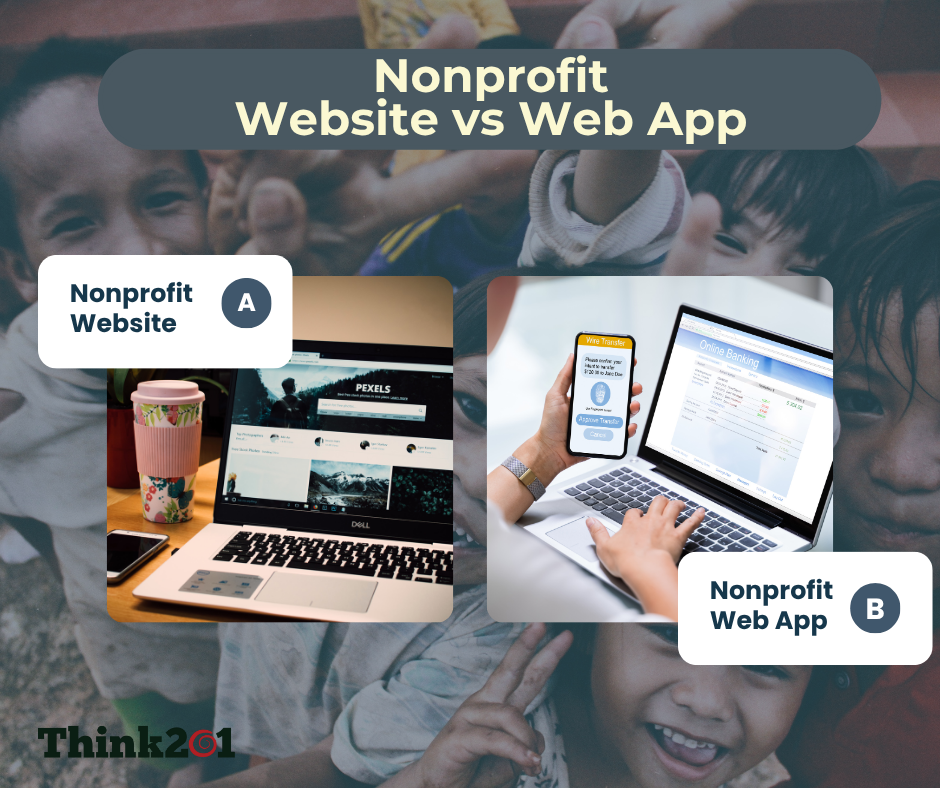
What Nonprofits Usually Mean by a Website
Most NGOs already have a website or plan to build one. A website is usually a public facing space that explains who you are, what you do, and how someone can support you. It is your digital identity.
A typical nonprofit website includes:
- About your organisation
- Details about your programmes
- A donation page
- A volunteer sign up form
- Impact stories and updates
- Contact information
A website works well when your main goal is to spread awareness, build trust, and help people understand your mission. It helps people discover your work, learn from you, and support you. For many NGOs, this is more than enough.
But a website reaches its limit when you need deeper interaction. It is not built for complex workflows, data heavy tasks, or personalised experiences. That is where a web app begins to make sense.
What a Web App Means in the Nonprofit World
A web app is not just a website with extra pages. It behaves more like a tool or a system. It lets people do things, not just read information.
Common nonprofit web app examples:
- Donor or fundraiser portal
- Beneficiary registration and tracking system
- Volunteer scheduling and coordination tools
- Data dashboards for monitoring and evaluation
- Case management platforms
- Internal workflow automation systems
Instead of just showing content, a web app helps your team and your stakeholders complete tasks, submit information, track progress, and interact with your organisation in a personalised way.
If your NGO manages a lot of data, coordinates many people, or runs structured programmes, a web app can help reduce manual effort and improve your operational flow.
Key Differences Between a Nonprofit Website and a Web App
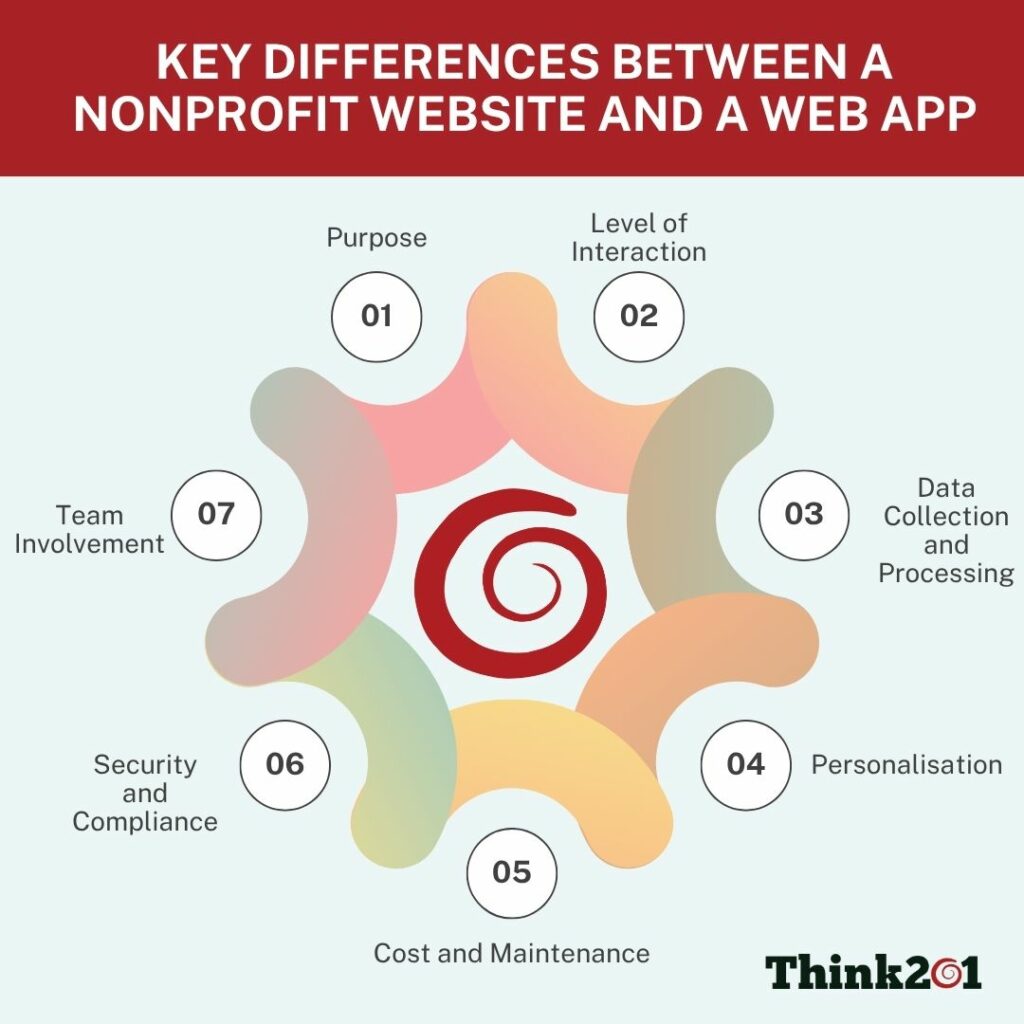
1. Purpose
A website informs. A web app enables action.
2. Level of Interaction
A website is mostly static content.
A web app lets users log in, submit information, manage tasks, or view personalised data.
3. Data Collection and Processing
Websites collect small amounts of information through simple forms.
Web apps handle large amounts of structured data and often automate how that data moves across your organisation.
4. Personalisation
A website shows the same information to everyone.
A web app gives people personalised views that match their role or relationship with your organisation.
5. Cost and Maintenance
A website is usually faster and cheaper to build and easier to maintain.
A web app requires ongoing updates, testing, data security checks, and technical support.
6. Security and Compliance
Websites need basic security.
Web apps need stronger protection because they store sensitive information about donors, volunteers, or beneficiaries.
7. Team Involvement
A website rarely touches your internal workflow.
A web app becomes part of your daily operations and must be planned carefully with your team.
How to Decide What Your Organisation Really Needs?
Here is a simple way to think about it.
Ask yourself:
Is your main challenge visibility and credibility
(then a website is enough)
or
Is your main challenge operational efficiency, data management, or scaling your programmes
(then a web app is the right path)
To decide with confidence, look at these factors:
Your mission goals
If your goal is awareness and outreach, choose a website. If your mission depends on structured processes and data, consider a web app.
Your current scale
Small to medium NGOs usually start with a strong website. Larger or fast growing organisations often need a web app sooner.
Your beneficiaries and stakeholders
If they need to access information or submit data often, a web app can make life easier for everyone.
Internal capacity
A web app requires a bit more training and internal adoption. Your team should be ready.
Your budget
Web apps need more investment, both during development and after launch. If your organisation cannot commit to long term maintenance, a website is safer.
Long term sustainability
Choose something your team can actually use and maintain. Over building is a common pitfall.
When a Website Makes More Sense
Here are real world scenarios where a website alone is the smarter choice.
- You are building your presence and need people to learn about your mission
- You want a simple way for people to donate or volunteer
- Your programmes are not very data heavy
- Your team wants something easy to manage without technical help
- You do not need personalised experiences for donors, partners, or beneficiaries
A strong website can still support powerful storytelling and donor trust.
When a Web App Is the Right Choice
A web app makes sense when your operations depend on ongoing interaction and structured processes.
- Your volunteers need to sign in, choose shifts, and track hours
- You manage a large number of beneficiaries
- You want to automate reports and monitoring
- Donors need personalised dashboards or receipts
- You run programmes that require many forms, checklists, or approvals
- You want to reduce manual spreadsheets and constant follow up calls
Think of a web app as a digital extension of your operations team.
Common Mistakes NGOs Make When Choosing Between a Website and a Web App
Thinking that a web app is only for big organisations
Even mid sized NGOs can benefit when operations become messy.
Overbuilding too early
Sometimes a website is enough, especially if you are still shaping your programmes.
Ignoring team readiness
A tool is only useful when the team adopts it.
Not planning for long term maintenance
Web apps are living systems. They need care.
Cost, Timeline, and Effort: A Simple Comparison
A basic website can take a few weeks with a modest budget.
A thoughtful web app can take a few months with a higher budget.
Cost depends on:
- Complexity of features
- Level of customisation
- Data security requirements
- Integration with other systems
- Training and onboarding needs
It is better to start small, validate the workflow, and grow the platform in phases.
How to Work With a Tech Partner Without Feeling Overwhelmed
A good tech partner should simplify things, not complicate them. Look for someone who:
- Understands how nonprofits work
- Asks you about your operations, not just your features
- Helps you shape your scope clearly
- Built in phases so you do not overspend
- Advises you honestly, even if it means a smaller project
Before you start, get clarity on:
- What problem you are solving
- Who will use the system
- What the workflow should look like
- What success looks like
The right partner will help you think long term instead of just building and disappearing.
Final Thoughts
There is no one correct choice. A website strengthens your visibility and credibility. A web app strengthens your internal operations and can help you scale your impact. Many NGOs eventually need both, but they do not need them at the same time. Start with the platform that solves your biggest challenge today, then build from there.
If you ever feel unsure, you can always speak with a tech partner who understands the nonprofit world. A short conversation often brings clarity and helps you avoid expensive mistakes.
If your organisation needs clarity on what to build next, Think201 can support you. We work with nonprofits, social enterprises, and early stage teams (for startups) that care about meaningful impact. As an NGO tech company focused on TechforGood, we help you understand what will truly serve your mission before you invest in anything.
Our team offers practical technology consulting and builds websites and web apps that match your programmes, your workflows, and your long term vision. If you want a partner who understands how nonprofits actually operate, Think201 is here to guide you.