Everything You Need to Know on Generative AI Development
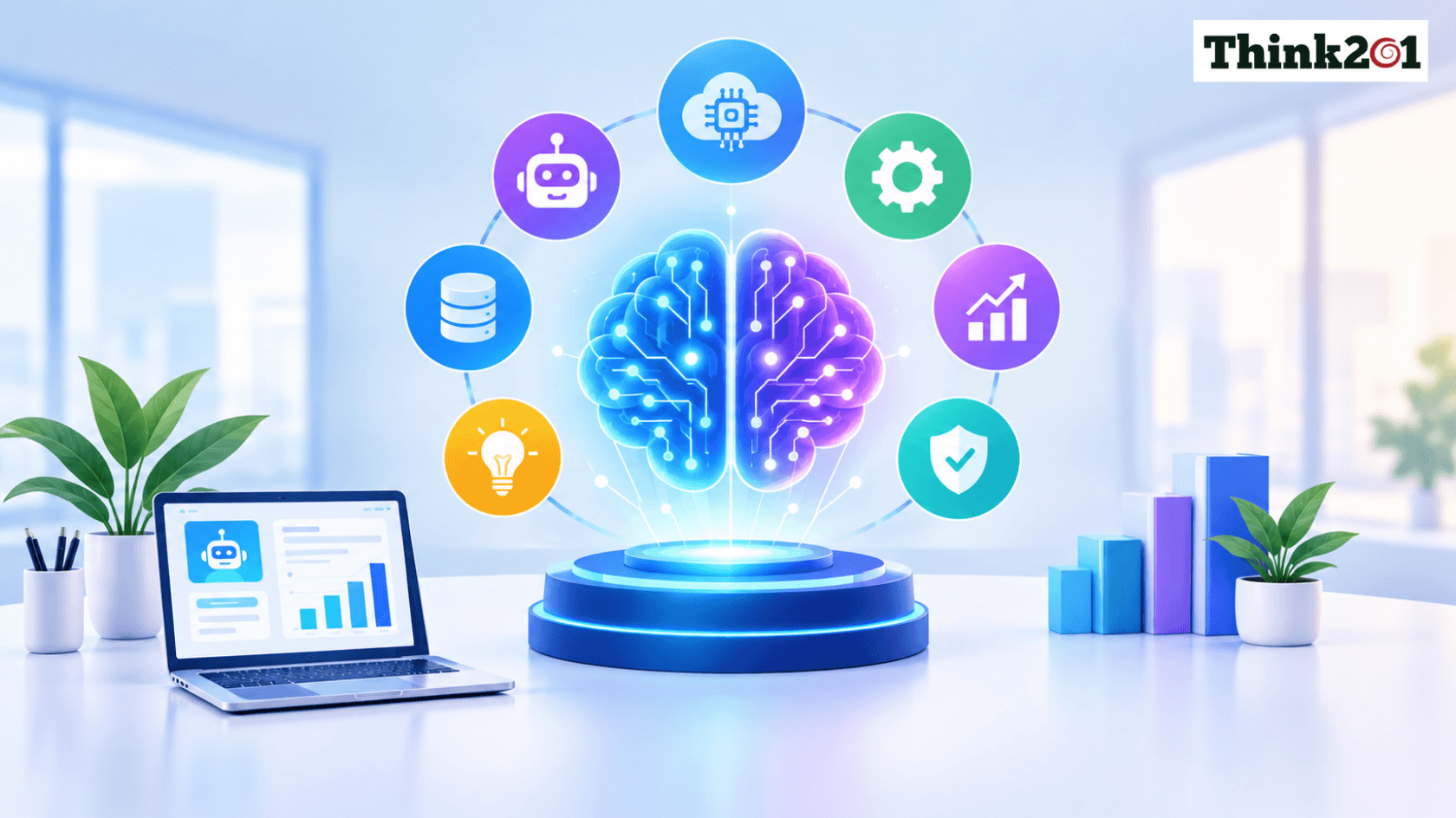
Generative AI has transformed how businesses approach software and digital experiences. Rather than just analyzing existing data or following fixed instructions, generative AI can create original content like text, images, code, audio, and other digital material.
This has introduced new opportunities in areas like customer support, content creation, software development, data analysis, and business automation. However, creating a valuable generative AI solution involves more than linking an AI model to an application. It requires the right data, technology, development methods, testing, security, and continuous improvement.
This guide covers what generative AI development entails, how it operates, where businesses can apply it, and what factors to consider before building such a solution.
What Is Generative AI?
Generative AI is a form of artificial intelligence that can produce new content by learning from existing data. Depending on the model, it can generate written text, images, code, audio, video, or other types of digital output.
For example, a generative AI tool might create a product description from a few details, summarize long documents, answer customer questions, or help developers write code.
Unlike traditional AI, which often focuses on recognizing patterns, making predictions, or categorizing information, generative AI goes further by producing new outputs based on user input or prompts.
What Is Generative AI Development?
Generative AI development is the process of designing, building, integrating, testing, and improving applications that use generative AI capabilities.
A development team may utilize an existing AI model via an API, adapt a model for a specific use case, or build a more tailored solution around a model. The approach depends on the application’s goals, data, budget, and technical needs.
The application layer is also crucial. A strong model alone is not enough to create a useful product. Developers must connect the model with business data, user interfaces, databases, APIs, security measures, and other software elements.
This is where AI development becomes more than model selection. It involves turning AI capabilities into a reliable product that people can actually use.
How Does Generative AI Work?
At its core, generative AI learns patterns from large datasets. When a user provides a request, the model uses what it has learned to create a response that aligns with the input.
For instance, a user might ask an AI assistant to:
- Summarize a customer complaint.
- Write an email reply.
- Extract information from a document.
- Generate product descriptions
- Create software code
- Answer questions about company policies.
The model does not simply search for a pre-existing answer. It generates a response based on the input, its learned patterns, and the available information.
In a business setting, developers can also link generative AI to internal data or external systems. This allows the application to deliver more relevant answers and perform tasks within a specific business context.
Key Technologies Used in Generative AI Development
Developing generative AI involves multiple technologies working together. The specific combination of tools and systems varies depending on the intended use, but certain components are commonly used.
Large Language Models
Large language models, or LLMs, are widely used for text-based generative AI applications. They can understand prompts and generate human-like text for tasks such as conversation, summarization, content generation, and question answering.
LLMs are frequently used to develop AI assistants, chatbots, document tools, and other applications that rely on language processing.
Retrieval-Augmented Generation
Retrieval-Augmented Generation, or RAG, is a method that connects a generative AI application with external information sources.
Rather than relying solely on the knowledge the model has been trained on, the system can first retrieve relevant details from documents, databases, or other knowledge sources before generating a response.
This technique is especially beneficial for applications tailored to specific businesses. For example, an employee assistant could search internal policies before responding to a query.
APIs and Integrations
Application Programming Interfaces (APIs) allow generative AI applications to interact with AI models and other software systems.
These connections can link an AI model to tools such as a customer relationship management (CRM) system, customer support platform, database, document management system, or internal business application.
These integrations help transform generative AI from a standalone chatbot into a valuable part of a broader digital workflow.
Data and Knowledge Sources
The effectiveness of a generative AI application mainly depends on the quality of the data it accesses.
Before implementing AI, businesses may need to organize documents, clean up data, establish access controls, and build dependable knowledge sources.
Generative AI Development Process
Creating a generative AI application does not necessarily require building a model from scratch. In many instances, developers build applications around pre-existing models and tailor their functionality for specific use cases.
The development process typically begins with defining the problem. The team identifies the purpose of the application, who will use it, and what constitutes success.
Next, the team selects data and a model. They determine the type of information the application will use and choose an appropriate model and approach. This may involve techniques such as APIs, RAG, fine-tuning, or other methods.
Once the model and data are in place, developers build the application and integrate the AI capabilities with the necessary software systems. The solution is then tested using realistic inputs to identify any inaccuracies, safety concerns, or inconsistencies.
When the application is ready, it is deployed and monitored. User feedback, performance metrics, and new requirements can then guide ongoing improvements.
Where Can Businesses Use Generative AI?
Generative AI has a wide range of applications across different industries because it can handle various types of data and perform diverse tasks.
Customer Support
AI assistants can answer common questions, summarize conversations, suggest replies, and help support teams find relevant information more quickly.
The goal is not always to replace human agents.
In many cases, generative AI assists employees by helping them handle routine tasks more efficiently.
Content and Marketing
Generative AI can be used to create initial drafts of product descriptions, emails, social media posts, summaries, and other forms of marketing content.
However, human review remains important, especially when the content needs to reflect a brand’s voice, provide accurate information, or meet specific quality standards.
Software Development
Generative AI can support developers by suggesting code, explaining existing code, creating documentation, and assisting with repetitive development tasks.
It can also aid in generating test cases and debugging, although all generated code should undergo proper review and testing.
Internal Knowledge Management
Employees often spend a significant amount of time searching through documents and internal systems. A generative AI assistant can improve this process by allowing employees to ask questions in natural language.
For instance, an employee might ask about a company policy instead of manually searching through multiple files.
Healthcare and Financial Services
Generative AI can assist with tasks such as document summarization, information retrieval, and customer communication in highly regulated industries like healthcare and financial services.
However, these applications require strict privacy, security, compliance, and human oversight. Businesses must carefully define what the AI can access and what decisions should remain under the responsibility of qualified professionals.
Benefits of Generative AI Development
The biggest advantage of generative AI is its ability to handle tasks that previously required significant manual effort.
It can help businesses automate repetitive work, improve access to information, support employees, and create more interactive digital experiences.
Generative AI can also make software interfaces more natural. Instead of navigating through multiple menus or learning specific commands, users can describe what they need in everyday language.
Another benefit is flexibility. The same underlying technology can support different business functions when developers connect it to the right data and workflows.
However, these benefits only appear when the solution is designed around a real business problem. Adding generative AI simply because it is trending does not guarantee useful results.
Challenges to Consider
Generative AI also has its difficulties. One key issue is precision. AI-generated responses might include misleading or wrong data.
Businesses should also be cautious about privacy. Sending confidential business or customer data to an AI service without proper controls can lead to security and compliance issues.
Cost is another important factor. AI applications can be expensive when they handle a large number of requests or require substantial computing power.
There is also the challenge of keeping the quality consistent over time. Models, data, user expectations, and business needs can change. This means applications need regular monitoring and updates.
How to Build Better Generative AI Applications
A strong generative AI application starts with a clear use case. Rather than asking, “Where can we use AI?” businesses should ask, “Which problem can AI solve more effectively or quickly?”
The next step is to pick the right model and setup. Not all applications need the most advanced or biggest model. A smaller, more targeted approach can deliver better results at a lower cost.
Data quality should be carefully considered. If an application uses business data, that data must be precise, up-to-date, and well-organized.
Testing should go beyond just technical performance. Teams should check if responses are accurate, relevant, safe, consistent, and suitable for the intended users.
Finally, businesses should keep an eye on the application after it is launched. Real-world use can uncover issues that weren’t present during initial development.
Role of an AI Development Company
Partnering with an AI development company can help businesses take an AI idea and turn it into a real-world solution.
A skilled team can help define the problem, choose the best technologies, create integrations, build the user experience, and prepare the application for use.
The value isn’t only in creating the AI feature. A successful solution must fit into current business processes and offer a dependable experience for its users.
For companies that do not have a large internal AI team, working with an experienced development partner can also save time and effort when evaluating different options.
What Is the Future of Generative AI Development?
Generative AI is moving beyond creating content. Companies are now exploring AI assistants that can understand context, work with business data, use tools, and support multiple-step processes.
This means future AI applications are likely to be more integrated with everyday business software. Instead of opening a separate AI tool, users may interact with AI directly within the applications they already use.
The focus will also change from simply asking what AI can produce to asking whether the output is accurate, helpful, secure, and beneficial for the business.
This shift makes thoughtful AI development even more important. Businesses will need to balance innovation with responsible design, strong data management, security, testing, and continuous improvement.
Final Thoughts
Generative AI offers businesses new opportunities to automate tasks, handle information more effectively, support employees, and deliver improved digital experiences. However, achieving success with AI implementation requires more than selecting the right model. Companies need a clear use case, dependable data, appropriate technology, thorough testing, and continuous monitoring.
The correct development strategy can transform generative AI from a promising technology into a useful business tool. Think201 assists businesses in turning ideas into easy-to-use digital experiences, including AI-driven applications, automation, and web and mobile solutions.
Are you ready to discover how generative AI can benefit your business? Contact Think201 to talk about your AI development needs and create a solution that aligns with your business objectives.
Frequently Asked Questions
1. How is generative AI developed?
Generative AI is developed by training AI models on large amounts of data so they can learn patterns and generate new content. Developers then integrate these models into applications using technologies such as APIs, retrieval-augmented generation (RAG), fine-tuning, and other development tools. The application is tested for accuracy, security, performance, and usefulness before deployment.
2. What are the top 3 generative AI tools?
The best-known generative AI tools include ChatGPT, Google Gemini, and Claude. They can generate and work with content such as text, summaries, ideas, code, and other forms of information. The right tool depends on the task, required features, integrations, and business needs.
3. What is meant by generative AI?
Generative AI is a type of artificial intelligence that creates new content based on patterns it has learned from existing data. It can generate text, images, code, audio, video, and other types of content in response to user instructions.
4. Can you give me an example of generative AI?
A simple example is an AI chatbot that writes an email based on a few instructions. For example, a user can ask it to draft a professional response to a customer complaint, and the AI generates a new response based on the prompt.
5. Where is generative AI used in everyday life?
People already use generative AI for tasks such as writing and editing messages, creating images, summarizing documents, translating content, generating code, answering questions, and getting personalized recommendations. Many AI assistants and productivity tools now include generative AI features.
Sources Referred
https://www.ibm.com/think/topics/generative-ai
https://www.geeksforgeeks.org/artificial-intelligence/what-is-generative-ai